
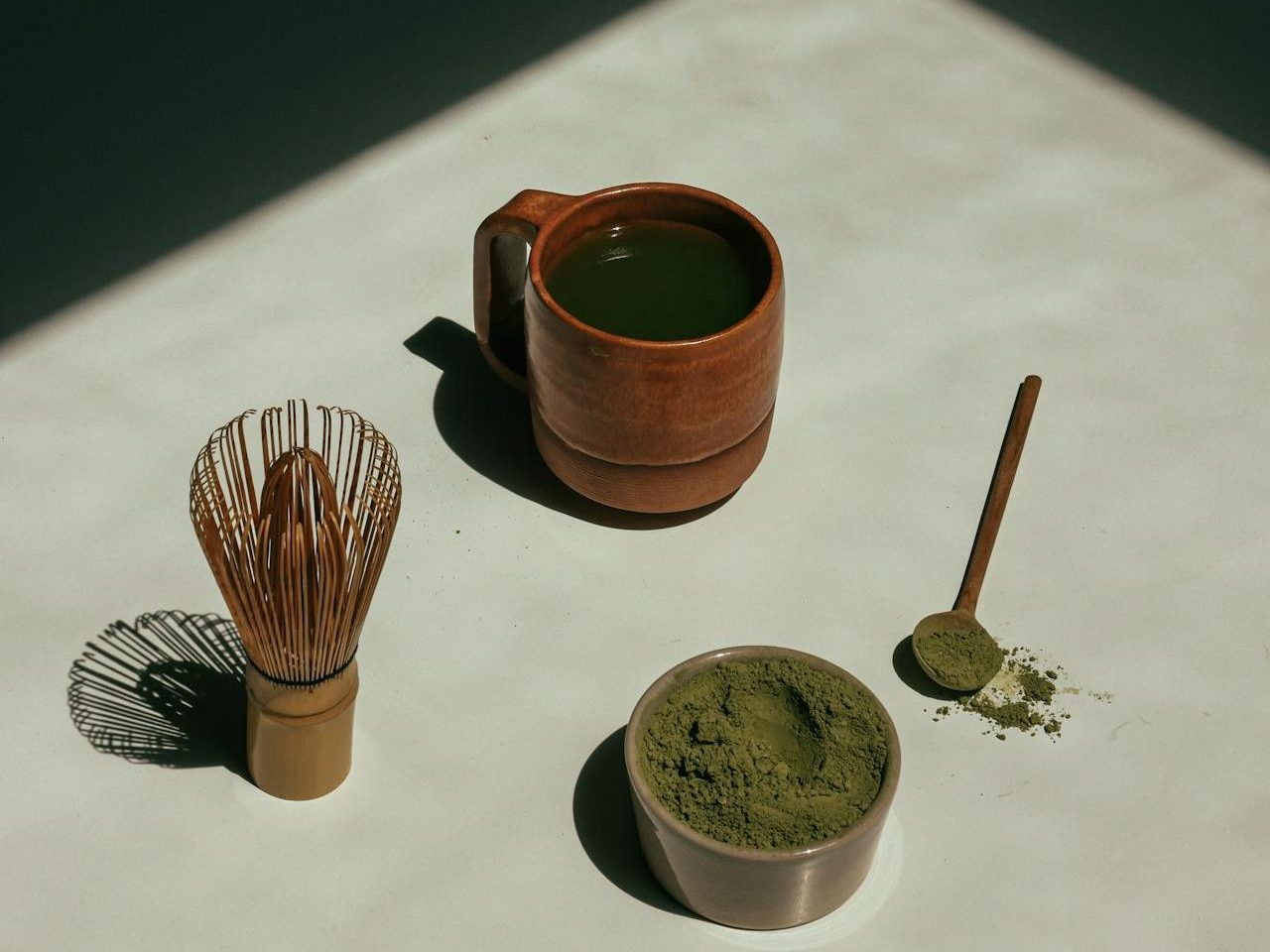
Matcha, a powdered green tea, enjoyed in Japan for centuries is now well-known for its health benefits and versatility in food and drinks. Consuming matcha is like drinking a concentrated green tea because you’re taking in the whole leaf, which retains many antioxidants and beneficial plant compounds. We’ll explore some of the health benefits of matcha and some precautions to keep in mind.
Health Benefits
Packed with Antioxidants
Matcha is known for its high concentration of catechins, a class of plant compounds that act as natural antioxidants. Antioxidants help to stabilize harmful free radicals, which can damage cells and cause chronic disease. Antioxidants like those found in matcha can help neutralize these potentially harmful free radicals.
Boosts Brain Function
Another benefit of matcha is its potential to enhance brain function. It’s not just the caffeine in matcha that keeps your mind sharp. It’s also rich in L-theanine, an amino acid that promotes alertness while helping avoid an energy crash. Some research shows that compared to the placebo group, several components in matcha can help enhance brain function, such as improved attention, reaction time, and memory.
Supports Heart Health
Heart disease is a leading cause of death worldwide. Studies have shown that drinking green tea may help protect against heart disease. Green tea has been shown to reduce total and “bad” LDL cholesterol levels. It may also help prevent the oxidation of LDL cholesterol, another factor that may protect against heart disease.
Other Claims
Matcha may also help protect the liver and is an excellent source of chlorophyll, a green plant pigment shown to have antioxidant properties and may help detoxify the body. However, more research is needed to understand these benefits fully. Claims about chlorophyll aiding digestion, promoting healthy skin, supporting the immune system, maintaining energy levels, and improving blood quality are more speculative and not strongly supported by scientific evidence
Precautions
While offering numerous health benefits, matcha has potential side effects, mainly when consumed in excess. Understanding these might be crucial before incorporating them into your daily routine.
- Caffeine-related side effects: Matcha contains caffeine, similar to other types of tea and coffee. While caffeine can provide benefits like increased alertness and improved cognitive function, it can also lead to insomnia, nervousness, irritability, nausea, and increased heart rate when consumed in large amounts. People who are sensitive to caffeine should be cautious when consuming matcha. A moderate amount is considered anything lower than 400 mg of caffeine; however, this tolerance may vary.
- Potential interference with iron absorption: Matcha contains a class of compounds known as polyphenols, which are beneficial antioxidants. Many plant foods are naturally rich in polyphenols. However, these same polyphenols can also bind to dietary iron and inhibit its absorption in the body. This could exacerbate conditions like iron deficiency anemia.
- Drug Interactions: The potent antioxidants in matcha may interact with certain medications. For example, the high vitamin K content could interfere with blood thinners. Also, the tannins in matcha can affect the absorption of certain drugs, so it’s essential to consult with your doctor if you’re on medication.
Budget Friendly Alternative
Another point worth considering is that high-quality matcha is significantly more expensive than regular green tea bags. So don’t worry if matcha is beyond your budget. Green tea bags contain a similar profile to matcha, albeit to a smaller extent, which can still be beneficial.
Conclusion
Consult a healthcare provider before taking matcha, especially if you have pre-existing health conditions, are pregnant, or take medications. In moderation, matcha can be a healthy addition to most diets. Many enjoy matcha without any issues and benefit from its various health properties. As with all things, moderation is essential, and listening to your body and personal needs is crucial. Matcha offers diverse and significant health benefits. It enhances mental clarity, improves heart health, and neutralizes free radicals.
Resources
Haskell, Crystal F et al. “The effects of L-theanine, caffeine and their combination on cognition and mood.” Biological psychology vol. 77,2 (2008): 113-22. doi:10.1016/j.biopsycho.2007.09.008
Kochman J, Jakubczyk K, Antoniewicz J, Mruk H, Janda K. Health Benefits and Chemical Composition of Matcha Green Tea: A Review. Molecules. 2021; 26(1):85. https://doi.org/10.3390/molecules26010085
Kim, Amie, et al. “Green tea catechins decrease total and low-density lipoprotein cholesterol: a systematic review and meta-analysis.” Journal of the American Dietetic Association 111.11 (2011): 1720-1729
Zhou, Jihong, et al. “Matcha green tea alleviates non-alcoholic fatty liver disease in high-fat diet-induced obese mice by regulating lipid metabolism and inflammatory responses.” Nutrients 13.6 (2021): 1950
Martins, Tânia, et al. “Enhancing health benefits through chlorophylls and chlorophyll-rich agro-food: A comprehensive review.” Molecules 28.14 (2023): 5344.
Tan, Christina San San, and Shaun Wen Huey Lee. “Warfarin and food, herbal or dietary supplement interactions: A systematic review.” British journal of clinical pharmacology87.2 (2021): 352-374.1. Jahrami, H., Al-Mutarid, M., Penson, P. E., Al-Islam Faris, M., Saif, Z., & Hammad, L. (2020). Intake of Caffeine and Its Association with Physical and Mental Health Status among University Students in Bahrain. Foods, 9(4), 473. https://doi.org/10.3390/foods9040473
Zijp, Itske M., Onno Korver, and Lilian BM Tijburg. “Effect of tea and other dietary factors on iron absorption.” Critical reviews in food science and nutrition 40.5 (2000): 371-398.